
Built as an expendable, short-duration turbojet engine for single-mission applications, it can power tactical cruise missiles, anti-ship missiles, and long-range loitering munitions.
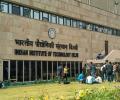
Researchers at IIT Delhi have successfully designed India's first working indigenous micro Graphics Processing Unit (GPU). This significant development aims to reduce the country's reliance on imported GPUs, which are crucial for AI, Machine Learning, and various embedded applications, and could help bridge the digital divide.

Kerala Home Minister Ramesh Chennithala announced plans to strengthen the state police's Cyberdome to combat cybersecurity threats and deploy indigenously developed robots for traffic management and disaster response. He emphasised the need for coordinated efforts to address growing cyber challenges and protect critical infrastructure, while also highlighting the role of the CoCoN conference in sharing knowledge.

The Indian Air Force has launched 'Dronathon 2026' at the Pokhran range in Jaisalmer, a three-day event showcasing advancements in unmanned aerial systems (UAS) and counter-UAS technologies by domestic manufacturers. The initiative aims to bolster the IAF's capabilities in the unmanned domain, align with the 'Atmanirbhar Bharat' objective, and assess indigenous technologies against operational requirements through live demonstrations. It also fosters interaction between the IAF, industry, and even students, promoting the development of scalable unmanned solutions.
India's indigenous Dilution Refrigerator, developed by AQV, has successfully reached four Kelvin (-269C) at the Quantum Reference Facility in Amaravati, marking a significant milestone in the country's quantum technology development and cryogenic engineering capabilities.
Drogo Aerospace's JK 250e fixed-wing VTOL UAV has received type certification from the DGCA on Thursday. This UAV, designed for the Indian armed forces' ISR needs, combines fixed-wing efficiency with VTOL capability and has an endurance of two to three hours. The certification is crucial for indigenous UAV technology development and operator training.

Drone technology company ideaForge Technology has successfully raised Rs 500 crore through a Qualified Institutional Placement (QIP). The funding, which saw strong interest from domestic and international institutional investors, will be used to accelerate innovation, expand its product portfolio into combat drones and autonomous systems, and strengthen its working capital to meet growing demand in defence, homeland security, and civil sectors.
Drone technology company ideaForge Technology has successfully raised Rs 500 crore through a Qualified Institutional Placement (QIP). The funding, which saw strong interest from domestic and international institutional investors, will be used to accelerate innovation, expand its product portfolio into combat drones and autonomous systems, and strengthen its working capital to meet growing demand in defence, homeland security, and civil sectors.

The BRICS New Delhi Declaration has endorsed India's proposals for a Working Group on Sports Technology and a Sports Goods Manufacturing Conclave, aiming to enhance cooperation and innovation among member nations in the sports sector.

Bengaluru-based electric air taxi startup Sarla Aviation has received Design Organisation Approval (DOA) from the Directorate General of Civil Aviation (DGCA), a crucial step towards commercial production of its indigenous electric vertical take-off and landing (eVTOL) aircraft. The company also inaugurated its new headquarters and announced partnerships, highlighting India's growing capabilities in advanced aerospace technology.
RRP Electronics and Orvis Semi Pvt Ltd have formed a strategic partnership to develop and manufacture low-light imaging sensors for defence, surveillance, and security in India. This collaboration aims to reduce reliance on imports and bolster India's semiconductor and defence electronics ecosystem under government initiatives like Make in India.

The Indian Navy is enhancing its operational capabilities across all domains, including air, underwater, AI, and quantum technology, to become a multi-domain network force. Vice Chief of Naval Staff, Vice Admiral Ajay Kochhar, highlighted lessons from recent conflicts, the exploration of directed-energy weapon systems, and significant procurement plans, including 42 new platforms on order and RFPs issued for LPDs and next-generation frigates. The Navy's focus on indigenous innovation and technology absorption, guided by "scale, sophistication, speed, and spiral development," aims to meet evolving operational requirements and protect maritime interests, especially amidst ongoing global crises.
High-performance computing server maker Netweb Technologies reported a more than twofold increase in net profit to Rs 85.32 crore for the first quarter ended June 30, 2026. This significant growth was primarily driven by its AI Systems segment, which contributed over 62% of the revenue. The company also saw its revenue from operations more than double to Rs 819.6 crore, reflecting strong demand and disciplined execution, with a robust order book of Rs 2,507 crore.

Atomic Energy Commission chairman Ajit Kumar Mohanty stated that India is on the verge of a significant technological transformation, driven by advancements in AI, quantum technologies, and other fields. Speaking at BIT Mesra's convocation, he emphasised the need for strong indigenous capabilities, skilled professionals, and interdisciplinary collaboration to achieve a developed India. Other speakers, including BIT Mesra's Chancellor and Vice Chancellor, echoed the importance of continuous learning and contributing to national progress.

The Maharashtra government has approved the deployment of sovereign artificial intelligence solutions from Sarvam AI for its departments, with a two-year outlay of Rs 11.26 crore. This initiative includes the Indus AI workspace for 2,500 users, ensuring government data remains within India, along with citizen outreach agents and speech models for the MahaAI platform.
The Haldwani forest division has launched India's first AI-based forest acoustic surveillance system. This innovative technology uses AI, acoustic sensors, and long-range wireless communication to detect illegal logging, poaching, and other suspicious activities in real-time, even in remote areas. Powered by solar energy, the system provides continuous monitoring, significantly enhancing forest protection, wildlife conservation, and biodiversity monitoring efforts.

The Indian Navy has commissioned INS Mangrol, its third anti-submarine warfare shallow water craft (ASW-SWC), in Mumbai. Built by Cochin Shipyard Limited, the vessel is designed to enhance India's ability to detect and counter submarine threats, especially in shallow coastal waters. Its induction is seen as vital amidst rising geopolitical tensions and increased submarine activity in the Indian Ocean, reinforcing India's indigenous shipbuilding capabilities and maritime security.

Jio Platforms Limited (JPL) believes satellite broadband services are unlikely to achieve significant scale or compete effectively on price in India's highly connected and affordable market, despite developing its own satellite constellation solutions and flagging it as a potential disruptor.
ideaForge Technology has received an order from the Survey of India for its Q6 V2 unmanned aerial vehicles. These advanced, DFCA-certified drones will enhance the Survey of India's ability to collect high-quality aerial and geospatial data for surveying and mapping across diverse terrains, offering efficient and rapid deployment for large-scale projects.

IIT Madras researchers have developed an indigenous pilot plant in Tiruchirappalli capable of processing 100 tonnes of electronic waste annually. This zero-discharge, single-acid process recovers valuable metals like copper, lead, and tin from PCBs, addressing India's growing e-waste challenge and supporting circular economy initiatives.
IIT Madras researchers have developed an indigenous pilot plant in Tiruchirappalli capable of processing 100 tonnes of electronic waste annually. This zero-discharge, single-acid process recovers valuable metals like copper, lead, and tin from PCBs, addressing India's growing e-waste challenge and supporting circular economy initiatives.

'From day one, our vision has been to build a company that develops and owns the technologies defining the future of space.'
The Indian Air Force (IAF) demonstrated 'Vayu UTtaM', an indigenously developed multi-mode Unmanned Traffic Management (UTM) system, at 'Dronathon 2026' in Pokhran. This ground-based system is designed to manage drone operations in congested airspace and identify rogue drones, with applications extending to critical infrastructure, civil aviation, and public safety. The event also saw the release of the 'IAF UAS Roadmap' to guide indigenous innovation in unmanned systems.

Paytm founder Vijay Shekhar Sharma has pledged personal funds, ranging from Rs 1 crore to Rs 2 crore, to Indian entrepreneurs developing their own artificial intelligence models. This initiative aims to foster indigenous AI capabilities and reduce reliance on foreign models, echoing Sharma's past success in mobile payments.

IBM India and South Asia MD Sandip Patel stated that India is at a defining moment with a unique opportunity to shape exponential technologies like artificial intelligence, emphasizing that "when India builds, it builds for billions," leading to scalable impact. Speaking at the IBM Think 2026 event, Patel highlighted that the AI revolution is still in its early stages, requiring enterprises to redesign their operations around agents, real-time data, automation, hybrid architecture, and trust. He also introduced the concept of "digital swaraj" or sovereignty in the Indian context, stressing the importance of control over operating environments, data, technology, and AI execution. IBM also announced an MoU with MeitY Startup Hub to accelerate India's deep tech innovation and startup ecosystem, providing startups access to IBM's technology expertise and platforms like watsonx and Sovereign Core.

An Indian firm, Bharat Forge, and US defence major Pratt & Whitney Canada have announced a collaboration to develop India's high-altitude, long-endurance (HALE) unmanned aerial vehicle (UAV). This partnership will focus on integrating advanced turboprop engines into the DRDO-designed HALE UAV, bolstering India's indigenous defence capabilities under the Aatmanirbhar Bharat initiative. The collaboration aims to enhance India's strategic self-reliance in surveillance and reconnaissance technology.

Union Minister Ashwini Vaishnaw warned of increased global turbulence from tech disruptions, AI, and financial risks in the coming years. He stated that India is strengthening its economic and technological resilience to protect its growth from external shocks. India is focusing on domestic manufacturing and design in critical tech areas while maintaining global integration, with trust becoming as crucial as cost in supply chains.
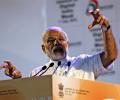
Prime Minister Narendra Modi, at the India Mobile Congress (IMC) 2026, articulated a vision for India's communications sector, emphasizing a global framework to combat cyber frauds and deepfakes. He called for India to become a hub for innovation and product development for the world. Industry leaders lauded his vision, highlighting India's robust digital infrastructure and its journey towards becoming a global technology leader, with a focus on trust, security, and responsible innovation.
Keralam-based Genrobotics Innovations, known for its Bandicoot robots used in hazardous underground environments, has secured a project from ISRO's U R Rao Satellite Centre. The company will develop a high-precision articulated boom arm system for satellite missions, marking its entry into advanced aerospace engineering and contributing to India's commercial space programme.

State-run Hindustan Aeronautics Limited (HAL) has delivered LCA Tejas FOC twin-seater trainers and HTT-40 basic trainer aircraft to the Indian Air Force, and Dhruv Next Generation helicopters to Pawan Hans. This significant handover, attended by Defence Minister Rajnath Singh and Civil Aviation Minister K Rammohan Naidu, underscores India's progress towards self-reliance in aerospace, strengthening both military and civil aviation capabilities with indigenous platforms.
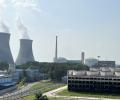
Atomic Energy Commission Chairman Ajit Kumar Mohanty announced that India's private sector is projected to invest Rs 7.5 lakh crore and contribute 30 GW towards the nation's goal of achieving 100 GW nuclear power capacity by 2047. This marks a significant policy shift, facilitated by the SHANTI Act, encouraging private participation in nuclear energy beyond the traditional public sector model. The country is also exploring Small Modular Reactors (SMRs) for industrial needs and advancing its three-stage nuclear power programme, leveraging its substantial thorium reserves.

Buying a mature rocket technology gives companies the designs and hardware know-how, but not necessarily the decades of engineering wisdom needed to make it work.
IT Minister Ashwini Vaishnaw announced that the Indian government will release a consultation paper on AI regulations within a month. This framework will address critical aspects like AI safety, deepfakes, and a human-first approach, emphasising the industry's primary responsibility in ensuring safe AI deployment. The move comes amidst growing global concerns over AI risks and the need for robust safeguards.

SCTIMST and Invasive Technologies have launched "Chitra Core," a new drug-eluting coronary stent designed with significantly less metal to reduce complications. This indigenous innovation, developed in collaboration, aims to provide advanced and cost-effective cardiac care, building on decades of Indian medical device development. The institute is also developing a unique TiN-coated stent for global markets.
Indian firm Bharat Forge and US defence major Pratt & Whitney Canada have announced a collaboration to support the development of India's high-altitude, long-endurance (HALE) unmanned aerial vehicle. This partnership involves integrating advanced turboprop engines into a DRDO-designed UAV, bolstering India's indigenous defence capabilities under the Aatmanirbhar Bharat initiative.
A seminar in New Delhi commemorated Acharya Prafulla Chandra Ray's birth anniversary, focusing on his significant contributions to pharmaceutical sciences and his vision for indigenous research and self-reliance. Organised by DPSRU and VIBHA, the event highlighted Ray's pioneering efforts in "Swadeshi science" and his role in establishing India's pharmaceutical industry.
Experts at a national symposium in Shillong discussed the role of Artificial Intelligence in tourism, emphasising that AI should support human judgment, local knowledge, and cultural values rather than replace them. Discussions highlighted the need for robust policies to address ethical concerns, safeguard livelihoods, and preserve cultural heritage while leveraging AI for innovation and sustainability in the tourism sector, particularly in Meghalaya.

Aerospace major Embraer and the Mahindra Group have identified Nagpur as a potential manufacturing hub for the C-390 Millennium military transport aircraft, should their bid for India's multi-billion-dollar Medium Transport Aircraft (MTA) deal be successful. This strategic partnership aims to establish a localised production and support ecosystem in India, aligning with the 'Make in India' initiative and strengthening the country's indigenous aerospace capabilities.
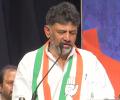
Karnataka Chief Minister D K Shivakumar lauded KEONICS' initiative to provide AI-based KEO computers to rural children, marking the institution's golden jubilee. The KEO computers, developed in Karnataka, aim to bridge the digital divide. Shivakumar also highlighted government efforts to promote IT beyond Bengaluru, enhance industry-oriented skills, and digitise property records, emphasising the state's commitment to technology and skill development.

BRICS Sports Ministers adopted a Joint Declaration in Visakhapatnam, reaffirming their commitment to strengthen sports cooperation through dialogue and mutual respect. The meeting, held under India's 2026 Chairship, saw Union Minister Dr. Mansukh Mandaviya call for a BRICS Sporting Partnership and introduce three key initiatives: a Working Group on Sports Technology, a Sports Manufacturing Conclave in Udaipur, and Traditional and Indigenous Sports Demonstration Games in Ahmedabad in 2026.
